Play Fair & Win Big: Building True Wealth (+ HUGE Announcement!) | Kesef & Kinyan Ep. 10
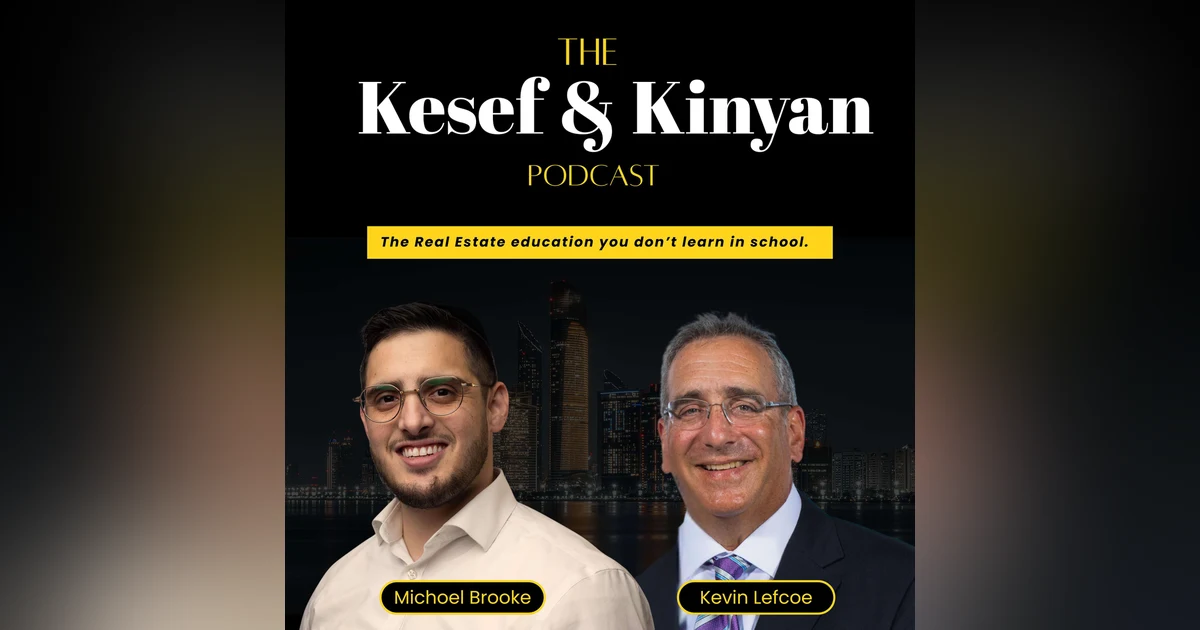


A handshake can feel like a contract until the moment someone gets nervous about the numbers. We start with a personal milestone and quickly get into a question every entrepreneur and real estate professional runs into: what do you do when you keep your word, but the other side treats agreements like suggestions?
We talk through the real mechanics behind broken promises and sudden “price changes,” including fear of losing money, the need for control, and straight-up intimidation of the less experienced party. We also push back on the line “it’s just business” and why that mindset can become a loophole for cutting corners on honesty, commissions, and basic fairness. If you care about business ethics, negotiation, and trust, this conversation gives you language for what’s happening and a clearer way to respond without getting pulled into the same games.
Then we get practical: when to demand signatures, how to vet who you’re dealing with, and why it’s often safer to structure your career so you’re not always hoping someone decides to pay you. We share a long-term wealth lens that moves beyond chasing a fee and toward building ownership, credibility, and repeatable deal flow. We also zoom out into the happiness question, why “more money” doesn’t automatically mean more peace, and what a meaningful life actually looks like when the work gets stressful.
If you got value from this, subscribe, share it with a friend who’s negotiating a deal right now, and leave a review so more people can find the show.
------------------------
Ready to Level Up Your Kesef & Kinyan Journey?
🎙️ Connect with Michael Brooke (Host):
- Call: (757) 679-4497
- Email: mbrooke@imperialnj.com
Interested in coaching, business consulting, or a personal meeting with Mr. Lefcoe?
Contact his Personal Assistant directly at: (757) 831-9696
- 📧 Email: Kevin Lefcoe: klefcoe@davlef.com
00:00 - Anniversary Banter And Warm Start
01:22 - The Cost Of A Handshake
06:38 - Why People Break Their Word
09:43 - “It’s Just Business” Gets Tested
13:33 - How To Protect Yourself In Deals
22:07 - Money, Meaning, And The Happiness Trap
26:17 - Pickleball Pitch And Closing Requests
Anniversary Banter And Warm Start
SPEAKER_00Let's jump right into it. Let's just start talking. Kesip and Kenyon. We're up to the lucky number. What are we up to, Pop? Six? Episode six?
SPEAKER_01Maybe seven.
SPEAKER_00Maybe seven. Seven. That's uh lucky number seven. And and I'm I'm thinking about numbers today because did you know that I married your daughter?
SPEAKER_01Uh are we live? Are you alive? Well, I was like, No, no, no. I was well, I could, but because I'm not going to, I just wanted to say happy anniversary, Michael. You uh married a good girl and uh just be blessed for many years of good health and shallom bias.
SPEAKER_00Man, you remember uh you remember first time you met me? And which first time I've known you since you were born, Michael.
SPEAKER_01You were you were zero.
SPEAKER_00Wow.
SPEAKER_01Uh I guess but what's so crazy is I've known you longer than you know you. Wow.
SPEAKER_00Well, that's deep to think about. That's well, it's it's been six years. Dr. Weissman should really well back in Virginia. He told me when I got married with my wife, he told us together. He said, Today is your wedding day, and it should be the worst day of your life going forward. So that was pretty cool because it's good. Yeah, well, what are we talking about?
SPEAKER_01What do we yeah, well, enjoy the day and uh all good things for you. What
The Cost Of A Handshake
SPEAKER_01are we talking about today, Michael?
SPEAKER_00We're talking about the cost of a handshake. We're talking about something that every Jewish businessman and entrepreneur needs to confront in their face and look at it straight in the eye and ask themselves where are their standards when it comes to dealing ethically and with straightness and integrity in business. Because I don't know about you.
SPEAKER_01It's not just Jews. Go ahead. You don't know about me, tell me. Go ahead. I want to talk about it.
SPEAKER_00But there's a lot of people playing the game dirty out there, and it really irks me. Well, it was, and and not just because uh of business ethics, but you know what really gets me? It's the fact that they just have a total disregard for let's talk Jews, let's talk Jews. I no, I don't even want to talk Jews, I want to talk like this. If people are playing the game to you, I have a couple deals deals here where people are not playing the game the way that the game is supposed to be played, and I'm gonna try to play the game the way that it should be played, but I feel like I'm at a disadvantage because I'm gonna play it by the rules. If I sign something at a 1% commission, I'm gonna stick to a 1% and I'm not gonna try to change that. But other people that I'm working with are just, oh yeah, no, it's it somehow bumped up to 5% and the price just increased. And like I feel like I'm at a disadvantage because I'm playing the game fair. What do you say about business ethics that have you been in this position?
SPEAKER_01Several times. Several times with people who, by the way, don't need my money. You know, they're they're I I I mean, you know, having been in in the real estate business now for 42 plus years, I can tell you that no matter who you're dealing with, and this is uh this comes right out of that book I showed you called Winning Through Intimidation by Robert Ringer. It's an older book. I think it I'm pretty sure it's out of print. You probably have to get one on uh if you if you go on uh eBay or something, some other uh thing like that. Amazon might even have it. I don't check anymore because I still have mine, but uh, it tells you a philosophy of in business, the only person who wants you to make money is that they'll make money when you make money. So that works out for, for instance, your brokerage firm. Your broker wants you to make as much money as you can because you split it with them, they really provide you certain uh uh certain functions in the office and coaching and empowerment, but every dollar you make, they get paid. But when you're dealing with somebody who owns a piece of property or you have an idea of your own, you know, when it comes to money, it changes. It changes. It's it's I had a friend of mine, we you know him, he said to me early on in my career, a good friend, older, very wealthy now. He goes, when it comes to money, people people are different. And uh you're seeing that up close and personal, but that's not the answer to your question.
SPEAKER_00Repeat your question. My question is that I feel like I'm at dis a disadvantage because I do play by the rules. And someone who doesn't, it's like when you're playing best.
SPEAKER_01The rules of the Almighty. Right, right, right. Well, m a lot a lot of people are you know are are are not learning their Gemara tight, and if they are, they're they're they're skipping over the important parts. Uh, you know, and they have to answer for that in a different way. But we're living in this world with Yitzahara and all kinds of other stuff. So uh and and when that's when you're talk talking about Jews. When you're talking about just general business concepts, you know, Jews are Jews and they're people too. So I'm still not answering your question. So, so let's let's let's uh let's skip the rule part for a minute and let's talk about practical applications. What is it that you're asking me about how to apply something? There's something that's on under your skin about how to how to how to uh navigate the the guy who tells you one thing and uh immediately does another.
SPEAKER_00So why won't you sign it? If you said it, why don't why won't you sign it?
SPEAKER_01And if you sign it, why won't you do it? Well well, I I want you to know that I learned that line from from one of my first uh sales managers, a good guy. Uh and yeah, he said, if you say it, why don't you sign it? I also have a friend in business who who who uh very wealthy guy, and when he goes to the bank to borrow money, the bank, and you know, a lot of people would say, Can I get this as a non-recourse loan? He doesn't say I'm gonna pay him back. I'll sign it. He I don't this particular guy, he'll sign your listing agreement, but I don't need to do anything but shake his hand because ready, he if you shake this guy's hand, you it's a contract for sure, but the contract goes both ways. So if you don't do what you're supposed to do in the contract of the shaking of the hand, he remembers that. And that can be a challenge on a number of levels. So there
Why People Break Their Word
SPEAKER_01are people who honor their handshake but as a contract, but but a lot of people don't. And really what it comes down to is I think a lot of it comes down to fear uh of losing, you know, what's gonna be in the future. So for instance, if you have somebody who's who who who makes a deal with you, which has happened to me before, I did get paid, but at the closing table, they told me, I've told you this story, I'm not gonna go take our time to do it. But at the closing table that I was the only one at with the money, I get a note from the attorney that says they want to cut your commission by $10,000. I went, why? Because they didn't think they were, they thought they were gonna net more out of this than that. So there becomes a fear of now what am I gonna be left with and what am I gonna do going forward? There that's a fear. There's other people who have where the it's the game of winning for just the sake of winning. Now that you know, the psychology of that could go back. You know, we could we just get a team of psychologists to work on that one because, you know, they probably got they probably were disrespected as a child or they worked their tushy off to make what they made, and you're gonna work yours off too, because I got to win. So the psychology of the player is is uh is is not something that you can, you know, that you can really get into. But those there are those are two different things. It's fear, it's control, it's you know it might be a combination of both. That that's why people are are are are reluctant to honor what they said they were gonna do. Because and and then, you know, one one other thing, Michael, that most people can't immediately tell about you because they're just meeting you. But you know, you're some 30-year-old pitcher that's out there trying to make a deal and you you don't know what you're doing, and we we're we're gonna take care of it because you don't know what you're doing. And, you know, I can intimidate you that way. And that's uh that's an approach. But when you have it signed, you have you have uh you have some legal protection, but if people don't want to pay and that happens, it's very hard to get your money out of them. So then it becomes a matter of who do you want to do business with? And sometimes you have to do some research as to who you're dealing with and do you trust them. Trust in business is one of the hardest things.
SPEAKER_00You said something very profound. I want to go back to it. You said that people don't play the game fairly sometimes. It's based out of fear, which means that it's really a lack of faith. And because they don't trust the process and they don't trust the rules of the game, and they don't really believe in in in in the right and wrong at this moment, so they're willing to cut the lines of integrity because it has to be done. Even even, you know, nobody nobody ever sinned. They just have they just take some long enough to convince themselves that it's uh that it's positive action. Um so you know, I think that's a big part of it and the actual faith. Um
“It’s Just Business” Gets Tested
SPEAKER_00when we talk about, you know, signing contracts and other types of business things, I think it's also very interesting that people have this three-word axiom that somehow exonerates them. They say this thing called, oh, come on, no, this is it's just business. They say it's just business. As if like it's just business becomes this grand uh, you know, uh prophetic statement that that acquits him uh from any sort of judgment because it's just business and this is the way the game is played. And I was running some numbers. I figured out that the whole it's just business thing, it may not make so much sense because I found that there were 613 mittos in the Torah, and over 100 of them have to do with honest weights, measures, pricing, deception, employee-employee relationships, lending, interest, property theft, charity, all these things, you know, uh are important there. Um, what do you do, Dad, to protect yourself? And and let me ask you another question. I'll ask a two-headed question. What do you do to protect yourself out there? And do you think the people who made money after they played the game dirty feel good about themselves? Or is it eating them up inside?
SPEAKER_01Well, uh again, you're getting into the individual psychology of people. You know, people have a way of rationalizing and moving on. And, you know, in in in our world, it has to do with uh how it's how you're gonna be treated when you have to answer the question, were you honest in business after after 120 years? But but that you're you're asking me about how people rationalize their choices, and everybody's so different, it's as different as a uh as a um as a as a fingerprint. You know, each our listening's different. Every you can hear the same thing someone says and think a completely different thing. Uh you can rationalize different things. You just we're we're we're wired that way. That I I so that that's I I don't I don't think you can spend you can, we do, we have to, because that's how we're made up to to to try to think about what's happening to that guy. What's how are they gonna sleep with themselves? And you you're not sleeping with them. The truth of the matter is the only person you're with all the time is you, right? So you have to be able to figure out how to deal with you. And I hope that I'll listen to this program uh a couple of times because that's really good advice. I hope I follow it. But um, but how do I protect myself? So I'm gonna tell you, Michael, when I was 27 years old, I had I had uh I was in a um a role as a leasing agent for office space. And this was a time of office building development. And uh my company at that time was involved in a couple of big office building developments. And I can't remember why the the big players in office leasing in our big corporation had moved on. I think that they had gotten opportunities. Maybe when one of the ladies got married, the other one got a big job with another developer and left a void. And I one of these buildings that came up was uh they they said, okay, you're gonna have that building, but then they went and hired a guy who was in his 40s with gray hair, and they figured that he was better with corporate dealing. And so they gave him the project, which made me move along to the sales department, which was fine for my career and everything else like that. So the reason I'm telling you this is that we what at that point in time, I realized that the only person that could guarantee me that I was gonna get paid, who was that? Go ahead, Michael. You can guess. Who is the only person that can guarantee me I'm gonna get paid? You. Right. Exactly. And that's what
How To Protect Yourself In Deals
SPEAKER_01happened. So how do I protect myself? Now I'm not perfect at it. There are a couple of times where I'm I'm in charge of paying myself and I don't because, you know, the property needs to be managed, and and I defer things for later on just to make sure that the project works. Uh not every deal is uh, you know, not every deal is gonna kill it. So the the matter of uh of understanding the financing of it and not getting yourself into a deep hole is an important component of my my approach. You know, some people say, let's just do the deal, let's get a finance, whatever. The the worst deal is when the best day of the deal is the day you close on it. I'll tell you that. Uh you you're you're you're you have to be looking toward your upside. So how I protect myself is if I see something that I think has value. Now I've done brokerage work, and I'm I'm not opposed to doing that. You get a listing agreement, you work with somebody who you know is gonna pay you, and and uh I I I I uh vet my different uh parties to know that that's not gonna be the problem. So I know that I'm gonna get paid based on the relationships that I have and understanding who they are. Um but uh I I put myself into the deals that I see as being practical for a piece of the deal, I invest in them. Uh sometimes I raise money to do that. Uh and uh you'll most of the people that you know who have been successful in acquiring a lot of property have uh have investment groups that they're able to put together. And that's a different lesson of how to how to get involved in acquisition real estate. But if you're the managing partner of a deal, um then you not only do you know you're gonna get paid eventually because you're the one that's got the checkbook, uh it also gives you uh an opportunity to be able to cre you know, an incentive to create wealth, not only for your partners, but for yourself. So I'm a I'm a fan of protecting myself by uh by by finding the things that I think have value and then creating uh a position where I'm the uh I'm I'm I'm the dis I'm I'm the man, I'm the decision maker. That's it. Not everybody Not everybody can do it, but you have to be, you know, they you you have to also be trustworthy that people are gonna, you know, are gonna are gonna invest with you. And I think that's really where you come in as being able to play the game by the rules using your uh vernacular. You know, I love it. You play the game by the rules, yeah. I love the game. I play the I'm Michael Brooke. I play the game by the rules. I'm not gonna take your money and and but I'm gonna tell you what I'm gonna make. And you know, it and and I'm gonna tell you what I'm gonna get paid, but the reason I'm in this is because the I'm inviting you in this is because when you come in with me, you're gonna make more money. People want to hear that. They want to hear I'm I'm here to make you money.
SPEAKER_00That's it. And you know why I love money, Dad? Because it's so darn hard to make it, honestly. That what that the the $5,000 that I made from from working on a transaction for six months and negotiated every side of the deal, and I didn't get paid heavy. I made $5,000. I could pay for, you know, half a month of my baby's formula food. And and but that $5,000 is so dear to me because I worked on it so hard and it's honest, clean money. And I think people forget that this is a game. I think people really do forget it's a game. I really think business is a game. It's a game that you're trying to win. And and and you know, if you if you believe and you work hard, there's a million and a half things that you can do to be a part of this game. You gotta play the rules fair. And when you play the game fair, you always, always win. You always win because the people that cheat, they lose. They lose in the long run, they lose in the short term, they make a little bit of extra money, and then their wife hates them. Well, maybe not because she got a lot of money and now she could buy something nice, but God's not happy with them.
SPEAKER_01So let's put it that way. Okay, well, yeah, but it you know, you that that is a that is a a good mantra to maintain a level of optimism, Michael. And and and it also uh it also incorporates uh some holy values. But let's get back to the the reality of the situation. You know, nobody who you're not making money for, the people you are they don't want you to make money. I don't know if I said that the way I want to. The only people who want you to make money is if you're making money for them or they make money when you make money. You know, there are only three types of people in the business world, and if you don't think that there are, you're you're you're you're missing the reality of a situation, and that is there are people who tell you at the beginning, watch yourself, because I'm not watching out for you. And that's the guy we really want to do business with, who tells you right up front, chips are on the table, I'm reaching for as many as many as I can, you better protect yourself because at least you know they're telling you the truth. If a person says, listen, I'm an honest guy, I wouldn't mess with you. That guy, you better watch out for. He's he he he'll you know. Honesty is a subjective term, it is not something that anyone sees the same way. And the the uh and and and the final one is the guy who really wants to pay you, but when he sees that he was supposed to net a half a million dollars and after tax and everything, he's got 50 grand left after paying you your decent commission. He goes, Wow, I really meant to pay you, but there's just not that much there. I'm really, really sorry. But but you but you're gonna have to take you're gonna have to take 15 grand, but even though your commission is 190, I understand, but you know, I didn't think I was gonna be left with nothing. And you're gonna take all this money? I I can't do that deal. I'm so sorry, but uh, you know, I didn't mean to cut your hand off at the wrist when you reach for your chips, but uh I really had no choice. So the guy really feels the guy feels bad, but uh but at the end of the day, he he he's looking at his pocket, and that's the reality of justice.
SPEAKER_00I love it. I love it. I like that last thing. Like, tell me, I I like that type of person. Tell me that it's all about the money and I need to protect myself and that you're also going for the most money, and then I know that I need to have contracts, and like as opposed to you know, telling me I I like that.
SPEAKER_01And uh You know, there there's also this stuff called panic, you know. I mean, you get to a point in life. I mean, I'm older now, you know, I'm thinking, what what am I doing? You know, uh do I feel like r hitting the ground running? I actually do, by the way. But you know, there you get to some points where you go, you know, I'm beating my head up against the wall enough times do I really want to keep doing this? Is there are is there possibilities? And and uh, you know, you have to you have to pick yourself up and get back in the game because that's really where you know li living is taking risks and all that stuff. You that that's that's what living is all about. But you you had said something earlier that um that you love money. And really, I I
Money, Meaning, And The Happiness Trap
SPEAKER_01you know I I understand your thought there. Uh I'm I wouldn't uh I I understand that, but frankly, I I don't I don't love money. What I do is I love you. I love my children, I love uh I love uh the state of Israel, I love, you know, I love my community. I I I I love to play golf, you know. Uh I like to I like to I like to go out in the world and make a difference. I love these things, right? The money is as long as there's enough in there to do the things that I love to do that makes life worth living, that's fine. Too much money, Rabbi Wahinovish Shalm used to say too much of anything is a problem. And that includes too much money. You know, Elon Musk, when asked if he's happy, he goes, No, well, not really happy at all. The guy, it it isn't because he can't call up his pilot and say, I'm gonna be at the plane in five minutes and we're taking off in seven, and whoever's not on it, you're not going with me. Or, or whoever wants to be on it, I'm leaving in seven minutes. And when he gets on the plane, he says, I'm I'm I'm you know, I'm ready to go. He sits down and the plane goes. That that sounds like it's great, but he can do that. But then you ask him, Are you happy? You know? The the Facebook guy just made a deal to you don't know if you're happy. The Facebook guy just made a deal for $18 billion to get out of a problem so he didn't have to go to court. You think $18 billion is bothering him? I mean, it is because he's in the Billionaires Boys Club, but you know, it isn't changing whether or not he can get on the plane, eat all the food he wants. You know, Marshall, I've told you maybe before is that there was the guy up in the penthouse and on the phone, and he's looking down on the beach and he sees the guy on the beach with a fishing pole. The guy on the fishing pole on the beach is is is fishing for his dinner. He looks up and he says, and he sees the the billionaire up in his penthouse on his phone on his porch, and he looks up and he says, just one day, one day, couldn't I just have the the the silk uh the silk robe and the and the cell phone and the beautiful view and the salt there? And I'm sure he's got a buffet, a breakfast up there, the people working for him. Cuban cigar. Cuban cigar. If he wants, if that's what you're into. And and and so and so he's sitting there fishing. Now, in the meantime, the billionaire on the on the uh on the top level just got told that his stock portfolio went down two billion. The deal that he was putting on to be able to do the development has a bird flying over it, and because of that, he can't do a six billion dollar deal. And meanwhile, there are people in his family that are fighting and they're yelling at each other, and and he's on the phone trying to figure all this out, and he looks down on the beach and he goes, just one day, just one day, wouldn't it be just so nice if all I had to think about was just being down on that beach with my fishing pole. So it said it, you know, we we look at everybody else's circumstances and we say, well, it wouldn't that be so great? It's a matter of being able to live. And I think we're in a time period of the calendar where we're looking at those things for the year to come as to what it is that that lights us up, that that makes us live. And so getting back to the point of how do you deal with with the the people who play dirty, I acknowledge that there's dirty out there. And you know, which game do you want to play? And do you want to play with me? Because, you know, I only got so many hours in the day, too, and I got my cute little boy at home that eats too much, you know, eating me out of formula. And I I need I I need to get back to that. And if I got to deal with you, uh this is how we're gonna do it.
SPEAKER_00I just don't got time. Yeah, yeah. I just, yeah, no one's got time for your nourish kite. You know, I heard, but after all this, we'll we'll end the conversation. But I heard I I uh because we got we got we got you know, daylight's burning, we got money to make. But I I got caught for I got caught on on what you said that you're ready to hit the ground running, you know, for your next project.
Pickleball Pitch And Closing Requests
SPEAKER_00And as a salesman, I think I have an idea. I'm trying to sell you something. I got five and a half acres zoned for pickleball right outside of an 55 plus community. I think we should go.
SPEAKER_01Is the building built?
SPEAKER_00Is there a building there? You have to build in there? There's five vacant um um antiquated warehouses on it. How tall are the ceilings? 21 feet on one of them, and the other ones are 15, like not the regular 21.
SPEAKER_01No, you gotta have you gotta have no less than 18 feet, and you gotta have and the poles inside of them can't be can't be too close to the court because if you're running for a ball, you don't want to run into the pole. Uh uh, we'll talk about that one another, we'll talk about that one another day. But um, Michael, just uh to end off real quick, uh, I know that uh you and I have been talking about a a a live uh morning interactive seminar uh there in Lakewood. We're gonna schedule a time to do that, right? Yes, we are.
SPEAKER_00Thank you for reminding me. This is a big teaser. I think we have two products that we'd like to bring to market that hopefully will be profitable in every way of knowledge and experience and money for everyone that we could do. We're gonna plan a live Cassiving Kenyan uh session with questions and answers from the crowd and maybe a little bit of some breakfast on maybe a Thanksgiving afternoon when people are off of work. And also, I'd like to go very granular and linear with you uh and record uh maybe like a 10-step video course for the basics of um examining in a deal, investing in real estate, development, like all the basics that somebody would need to know that they could, you know, buy it and just watch it and learn it, the basics uh from someone who's done it before. So yeah.
SPEAKER_01Well, stay tuned for bring those to market. Tell everybody to stay tuned for details and smash the different buttons that uh make the motivation congregation stay in business because that's important to everybody.
SPEAKER_00Yeah, slap that subscribe button, slap that donate button, hit it again, and then um and and don't forget to uh share with all your friends and donate button.
SPEAKER_01Enjoy the day and uh and uh many more years in good health and shalom byes. We'll uh we'll talk to you next time. All right, bye. All righty papa do.