
Why Do Jews Travel to Uman for Rosh Hashanah?
Why Do Jews Travel to Uman for Rosh Hashanah?
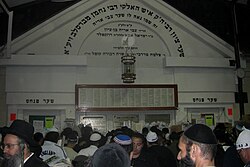
Every year, tens of thousands of Jewish men travel to Uman, Ukraine, to spend Rosh Hashanah near the resting place of Rebbe Nachman of Breslov. Why do so many Jews leave their homes and communities for the holiest days of the Jewish year?
The answer is rooted in Rebbe Nachman’s teachings about Rosh Hashanah, the spiritual role of the tzaddik, and the power of Jews gathering together in prayer and teshuvah.
The Uman Rosh Hashanah gathering is not simply a pilgrimage to a grave. It is the continuation of an annual gathering that Rebbe Nachman established during his lifetime and that his leading disciple, Reb Noson of Breslov, continued after his passing.
Who Was Rebbe Nachman of Breslov?
Rebbe Nachman of Breslov was born in 5532/1772 in Mezhibuzh. He was a great-grandson of the Baal Shem Tov and became one of the most original and influential teachers in the Chassidic world.
His teachings emphasized sincere tefillah, personal conversation with Hashem, simchah, simple faith, constant spiritual growth, and the refusal to surrender to despair. One of his best-known teachings is:
“Ein shum ye’ush ba’olam klal”—There is absolutely no despair in the world.
Rebbe Nachman taught that even a Jew who has fallen spiritually can return to Hashem. No failure must become permanent, and no Jewish soul is beyond repair.
This message of renewal is closely connected to Rosh Hashanah, the day on which the entire world is judged and a new spiritual beginning becomes possible.
The Original Rosh Hashanah Gathering
The Breslov gathering on Rosh Hashanah began while Rebbe Nachman was still alive. His followers would travel to spend the Yom Tov with him, daven together, hear his Torah and receive spiritual guidance for the coming year.
Shortly before the final Rosh Hashanah of his life, Rebbe Nachman spoke with exceptional urgency about the importance of attending the gathering. Reb Noson records his famous declaration:
“Rosh Hashanah sheli oleh al hakol”—My Rosh Hashanah surpasses everything.
Rebbe Nachman expressed surprise that those who believed in his teachings were not all careful to be with him. He concluded with the powerful words:
“Ish bal ye’ader”—No one should be absent.
These statements appear in Chayei Moharan, in the section devoted to the greatness of Rebbe Nachman’s Rosh Hashanah.
Within Breslov Chassidus, these words established Rosh Hashanah as the central annual gathering of Rebbe Nachman’s followers.
Why Did Rebbe Nachman Emphasize Rosh Hashanah?
Rosh Hashanah is much more than the beginning of a new calendar year. It is the day on which Hashem is proclaimed King and every person passes before Him in judgment.
The central themes of the day are expressed in the three primary sections of the Mussaf Shemoneh Esrei:
-
Malchiyos: Proclaiming Hashem’s kingship
-
Zichronos: Asking Hashem to remember us favorably
-
Shofaros: Awakening ourselves through the sound of the shofar
Because Rosh Hashanah stands at the spiritual root of the coming year, Rebbe Nachman believed that extraordinary spiritual rectifications could be accomplished then.
Reb Noson records that certain people could receive a tikkun on Rosh Hashanah that they might not be able to attain during the rest of the year. Rebbe Nachman therefore viewed the gathering as an opportunity for even spiritually distant Jews to begin again.
Traveling to a Tzaddik on Rosh Hashanah
Rebbe Nachman explains the deeper meaning of traveling to tzaddikim for Rosh Hashanah in Likkutei Moharan I:211.
Rosh Hashanah is the day of judgment, and judgment has its spiritual root in a person’s thoughts and inner awareness. Rebbe Nachman teaches that connecting oneself to genuine tzaddikim can help purify the mind and “sweeten” harsh judgments at their source.
This does not mean that a tzaddik replaces Hashem or removes personal responsibility. A tzaddik serves as a rebbe and spiritual guide whose Torah, example and merit help others strengthen their relationship with HaKadosh Baruch Hu.
Ultimately, teshuvah must be performed by the individual. A person must regret his wrongdoing, confess before Hashem, abandon the sin and sincerely resolve to improve.
What Is the Rosh Hashanah Kibbutz?
The annual gathering is known as the Rosh Hashanah Kibbutz. In this context, the Hebrew word kibbutz simply means a gathering or assembly.
It refers to the gathering of Breslover Chassidim—and many Jews from outside the Breslov community—for communal prayer, Torah learning, Tehillim, tzedakah and spiritual renewal.
The communal element is fundamental. Rosh Hashanah is the coronation of Hashem as King, and a coronation is conducted by a nation rather than by isolated individuals. Thousands of Jews from different backgrounds gather with a shared desire to daven, perform teshuvah and begin the year with greater commitment.
The powerful atmosphere of communal prayer is one of the primary reasons that many participants describe Uman as a life-changing experience.
Why Is Rebbe Nachman Buried in Uman?
Although he is known as Rebbe Nachman of Breslov, Rebbe Nachman spent the final months of his life in Uman.
The city had a tragic Jewish history. In 5528/1768, many thousands of Jews were murdered in Uman al kiddush Hashem. Rebbe Nachman specifically desired to be buried among these kedoshim.
According to Chayei Moharan, Rebbe Nachman considered the cemetery in Uman a spiritually significant place and repeatedly expressed his desire to be buried there. After his passing on 18 Tishrei 5571/1810, during Chol HaMoed Sukkos, he was buried in Uman’s old Jewish cemetery.
For Breslover Chassidim, Uman is therefore not an accidental location. It is the place Rebbe Nachman personally selected for his burial.
How Did the Uman Tradition Continue?
After Rebbe Nachman’s passing, his closest disciple, Reb Noson of Breslov, understood the Rebbe’s final instructions to mean that the Rosh Hashanah gathering should continue at his resting place.
Reb Noson organized the first posthumous Rosh Hashanah kibbutz in Uman in 1811. From that point onward, Uman became the primary destination for the annual Breslov gathering.
The tradition continued despite poverty, war and government persecution. Under Communist rule, public Jewish gatherings were prohibited, and traveling to Uman could result in arrest or exile. Nevertheless, small groups of Breslover Chassidim continued to gather secretly.
After the collapse of the Soviet Union, travel to Uman became possible on a much larger scale. What had once been a small and dangerous gathering developed into an international event attended by Jews from many countries and communities.
What Is the Tikkun HaKlali?
A second reason Jews visit Uman is Rebbe Nachman’s promise concerning the Tikkun HaKlali.
The Tikkun HaKlali consists of ten chapters of Tehillim:
16, 32, 41, 42, 59, 77, 90, 105, 137 and 150.
Rebbe Nachman declared before witnesses that after his passing, if a person came to his grave, gave a coin to tzedakah and recited these ten chapters, he would make an extraordinary effort to assist that person’s spiritual rectification.
This promise is recorded in Sichos HaRan 141 and in other Breslov sources discussing the Tikkun HaKlali.
However, an important distinction must be made: the promise of the Tikkun HaKlali is not limited to Rosh Hashanah. It applies to visiting Rebbe Nachman’s grave at any time. The Rosh Hashanah gathering is based upon his separate teachings about spending Rosh Hashanah with him.
The promise must also not be misunderstood as permission to continue sinning. The purpose of the Tikkun HaKlali is to help a person escape despair and return to Hashem. Genuine teshuvah still requires sincere regret and a commitment not to repeat the wrongdoing.
Does Judaism Permit Praying at a Grave?
Visiting the graves of tzaddikim has deep roots in Jewish tradition.
The Gemara teaches that Kalev went to the graves of the Avos in Chevron and prayed to be protected from joining the sinful plan of the meraglim (Sotah 34b).
The Rema records the custom of visiting a cemetery on Erev Rosh Hashanah and giving tzedakah there. The Mishnah Berurah explains that the resting places of tzaddikim are especially appropriate places for prayer.
However, the Mishnah Berurah adds a crucial warning: a person must not direct his prayers toward the deceased. He should pray to Hashem and ask that Hashem show mercy in the merit of the tzaddikim buried there (Mishnah Berurah 581:27).
A Torah-observant Jew believes that only Hashem controls the world and grants salvation. The tzaddik possesses no power independent of Hashem.
Must Every Jew Travel to Uman?
Traveling to Uman for Rosh Hashanah is a foundational Breslov practice, but it is not a universal halachic obligation for every Orthodox Jew.
Many great tzaddikim and Torah authorities spend Rosh Hashanah in their own communities. A Jew can unquestionably experience a meaningful and spiritually elevated Rosh Hashanah in his regular shul, together with his family and community.
Even someone strongly influenced by Rebbe Nachman’s teachings must consider his personal responsibilities. Family needs, finances, health, safety, travel conditions and questions regarding leaving Eretz Yisrael may all affect the decision.
Anyone facing such concerns should consult a competent rav who understands both the individual’s circumstances and the spiritual importance he attaches to the journey.
It is therefore incorrect to dismiss Uman as mere religious tourism. The gathering is rooted in a serious and well-documented Breslov tradition. At the same time, it would be incorrect to claim that every Orthodox Jew is obligated to attend.
The True Meaning of the Journey to Uman
The real purpose of traveling to Uman is teshuvah.
The physical journey is meant to represent an internal journey: leaving behind complacency, confronting one’s failures and believing that change remains possible.
Rebbe Nachman taught that despair is one of the greatest obstacles to spiritual growth. Once a person believes that he is permanently broken, he stops trying. The message of Uman is that no Jew is too distant to return and no sincere beginning is insignificant.
But merely traveling to Uman cannot transform a person. A plane ticket is not teshuvah. Standing near a kever is not automatically tefillah, and temporary inspiration cannot replace lasting commitment.
The spiritual value of Uman depends upon how a person davens, learns and behaves while he is there—and upon what he brings back into his daily life.
Properly understood, the journey is not a movement away from Hashem toward a human intermediary. It is a journey toward Hashem through the teachings of a tzaddik who devoted his life to awakening Jewish souls.
Frequently Asked Questions
Why do Jews go to Uman for Rosh Hashanah?
Jews travel to Uman because Rebbe Nachman of Breslov instructed his followers to gather with him on Rosh Hashanah. After his passing, Reb Noson continued the gathering at Rebbe Nachman’s resting place in Uman.
Who is buried in Uman?
Rebbe Nachman of Breslov is buried in Uman’s old Jewish cemetery. The cemetery is also associated with many Jews who were murdered al kiddush Hashem during the Uman massacre of 1768.
What did Rebbe Nachman say about Rosh Hashanah?
Rebbe Nachman declared, “Rosh Hashanah sheli oleh al hakol”—“My Rosh Hashanah surpasses everything.” He urged his followers to attend the gathering and said, “Ish bal ye’ader”—no one should be absent.
What is the Tikkun HaKlali?
The Tikkun HaKlali is a collection of ten chapters of Tehillim selected by Rebbe Nachman: chapters 16, 32, 41, 42, 59, 77, 90, 105, 137 and 150.
Is the Tikkun HaKlali promise limited to Rosh Hashanah?
No. Rebbe Nachman’s promise concerning the Tikkun HaKlali at his grave applies throughout the year. His call to gather on Rosh Hashanah is a separate, though closely related, Breslov teaching.
Do Jews pray to Rebbe Nachman in Uman?
No. Jewish prayer is directed exclusively to Hashem. The proper purpose of visiting a tzaddik’s grave is to pray to Hashem, awaken oneself to teshuvah and invoke the merit of the tzaddik.
Is every Orthodox Jew required to visit Uman?
No. The Uman gathering is central to Breslov Chassidus, but it is not a universal obligation for every Orthodox Jew. Personal and halachic questions should be discussed with one’s rav.